
Case study · Parametric CAD for guitar making
How better CAD changed a custom guitar build
Parametric SolidWorks models for Anesidora Headless Guitars
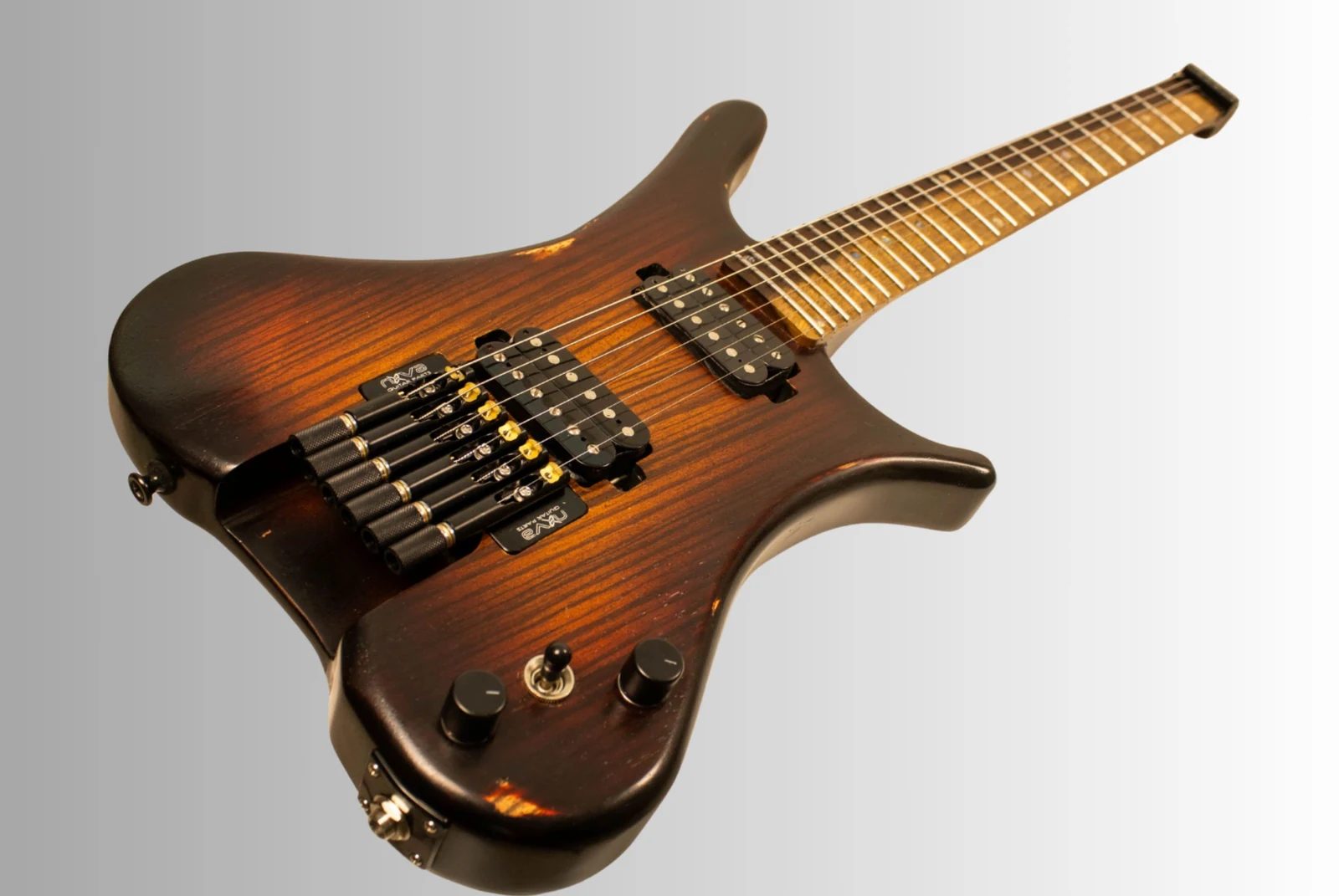
John, the owner and operator of Anesidora Headless Guitars, came to Biangle Labs in 2024 with a specific frustration: changing a guitar’s scale length meant recreating the CAD model. He wanted a model he could adapt for the next instrument, rather than start again.
The first design tool was a whiteboard
John spent 20 minutes walking us through the mathematics behind fret positions. The first milestone was deliberately narrow: a parametric fretboard model that could generate a range of reasonable scale lengths on demand.
We built the model in SolidWorks. John generated new toolpaths and CNC-machined a fretboard from it. With that first part in hand, the next question followed naturally: could the neck work the same way?
From one fretboard to a configurable design
The work expanded through several cycles of custom neck profiles and small corrections to the existing body design. The model shown here uses 11 driving variables to generate variations without rebuilding the geometry each time.
The options grew to include compound-radius and scalloped fretboards, different truss-rod styles and positions, bass and baritone necks, and chambered bodies. Changes that once took hours could be generated in minutes within the developed model.
CAD also gave John a way to preview wood-grain direction using texture mapping before cutting expensive hardwood. Those images are digital previews; the physical instruments show the material and finish that followed.
Parametric CAD → neck variants → finished guitars
The CAD views and photographs show different configurations and stages of development, rather than one identical instrument at every step.
Geometry with variables behind it
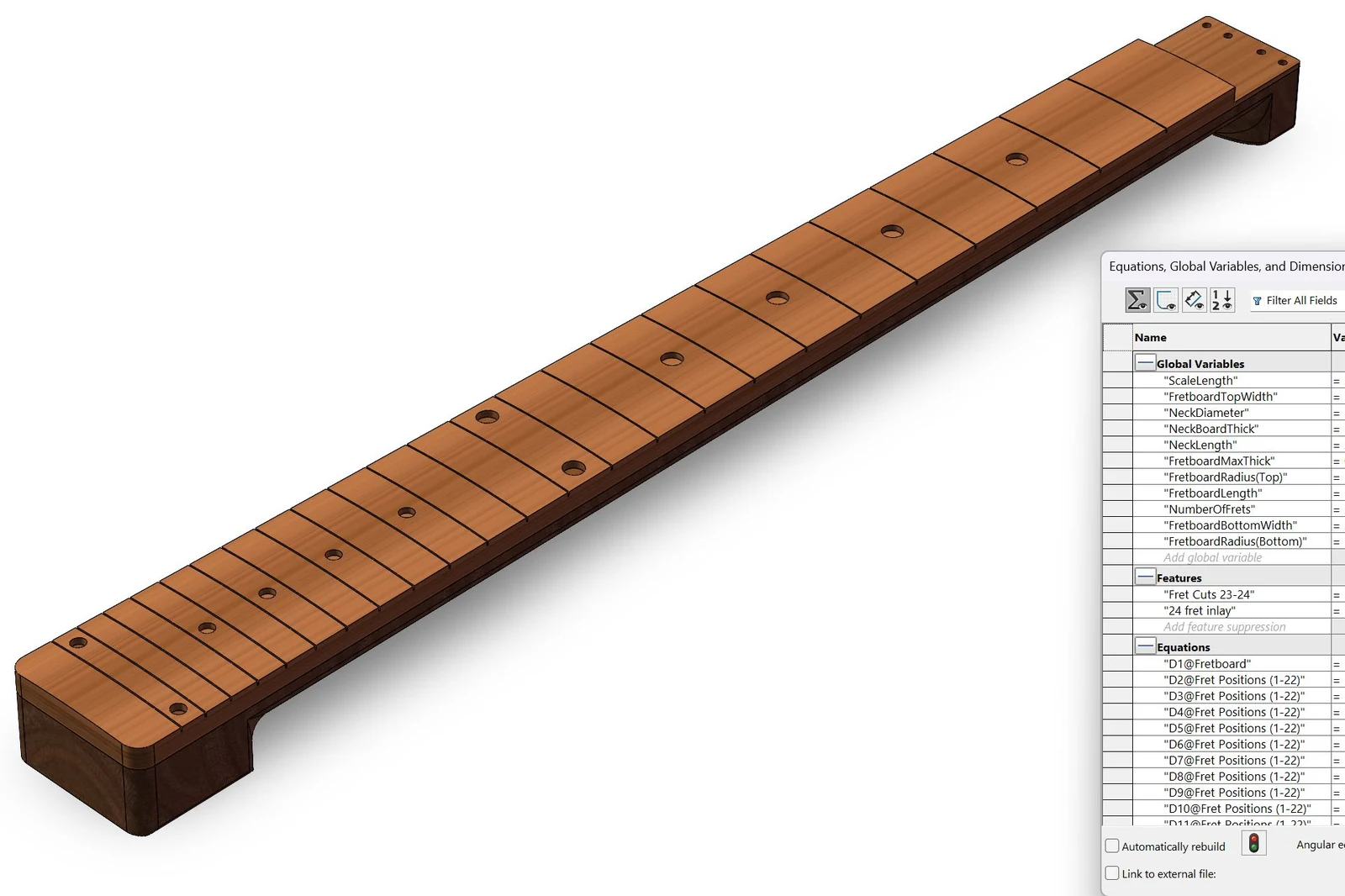
Explore the neck before cutting wood
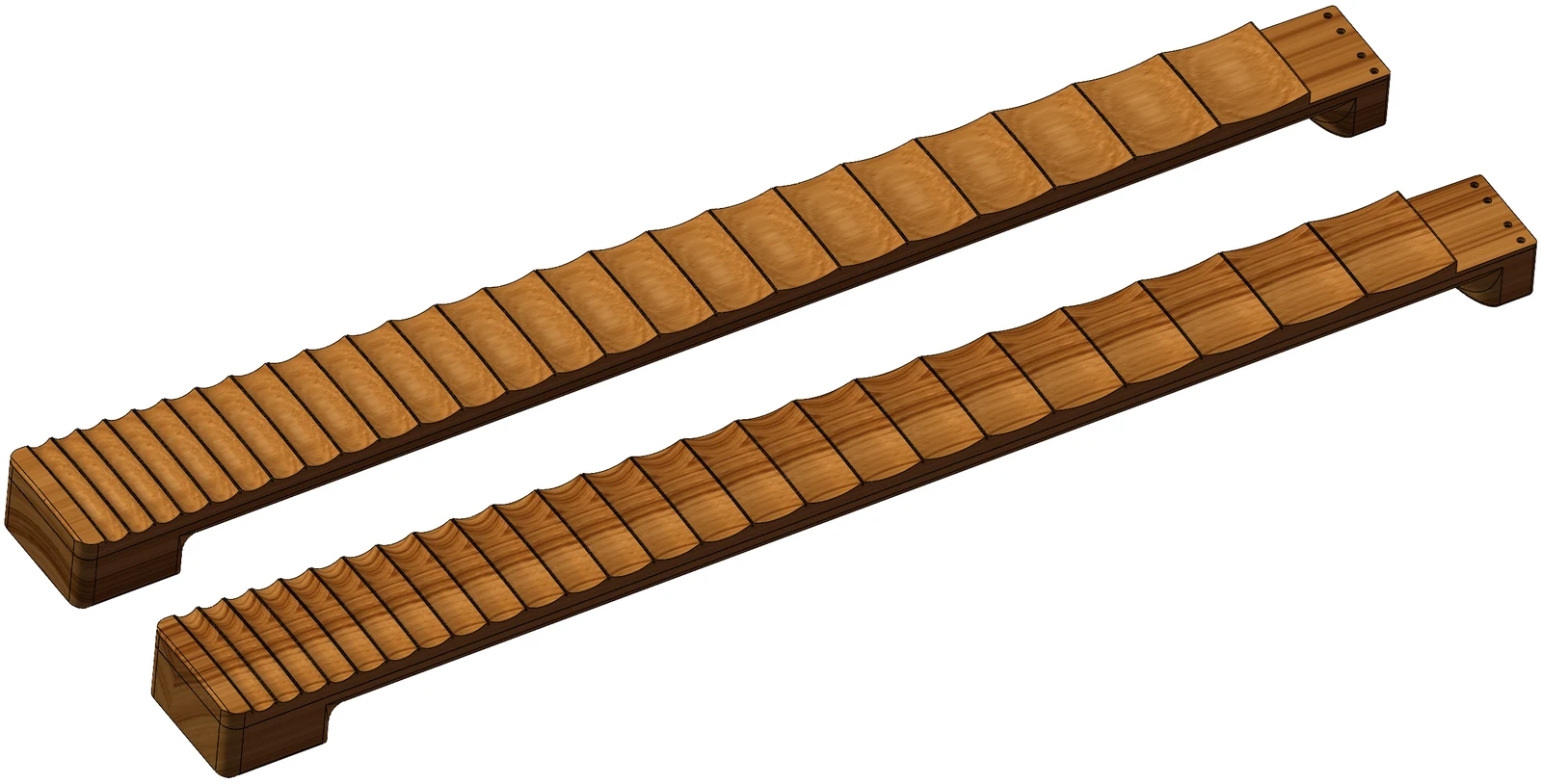
An earlier body configuration
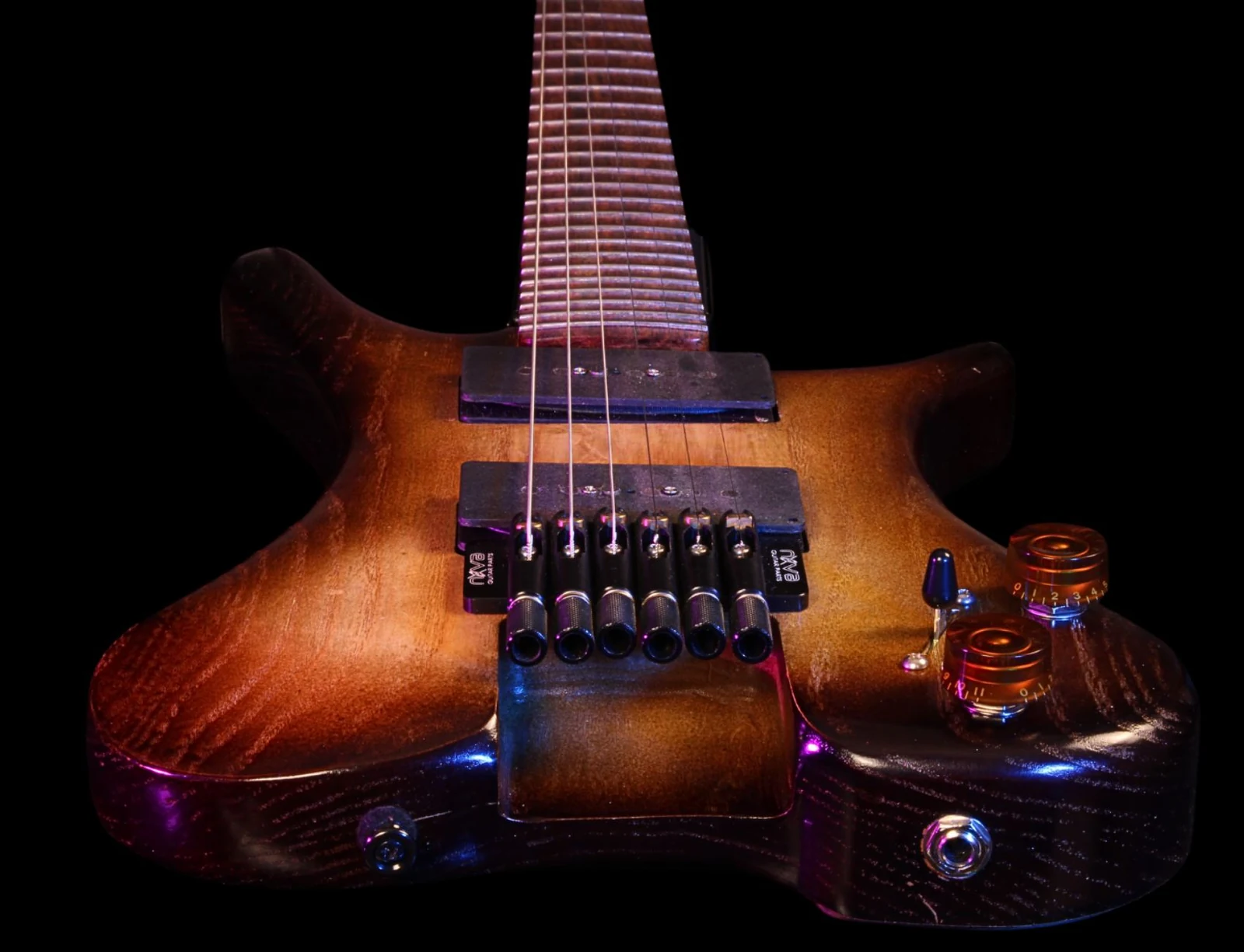
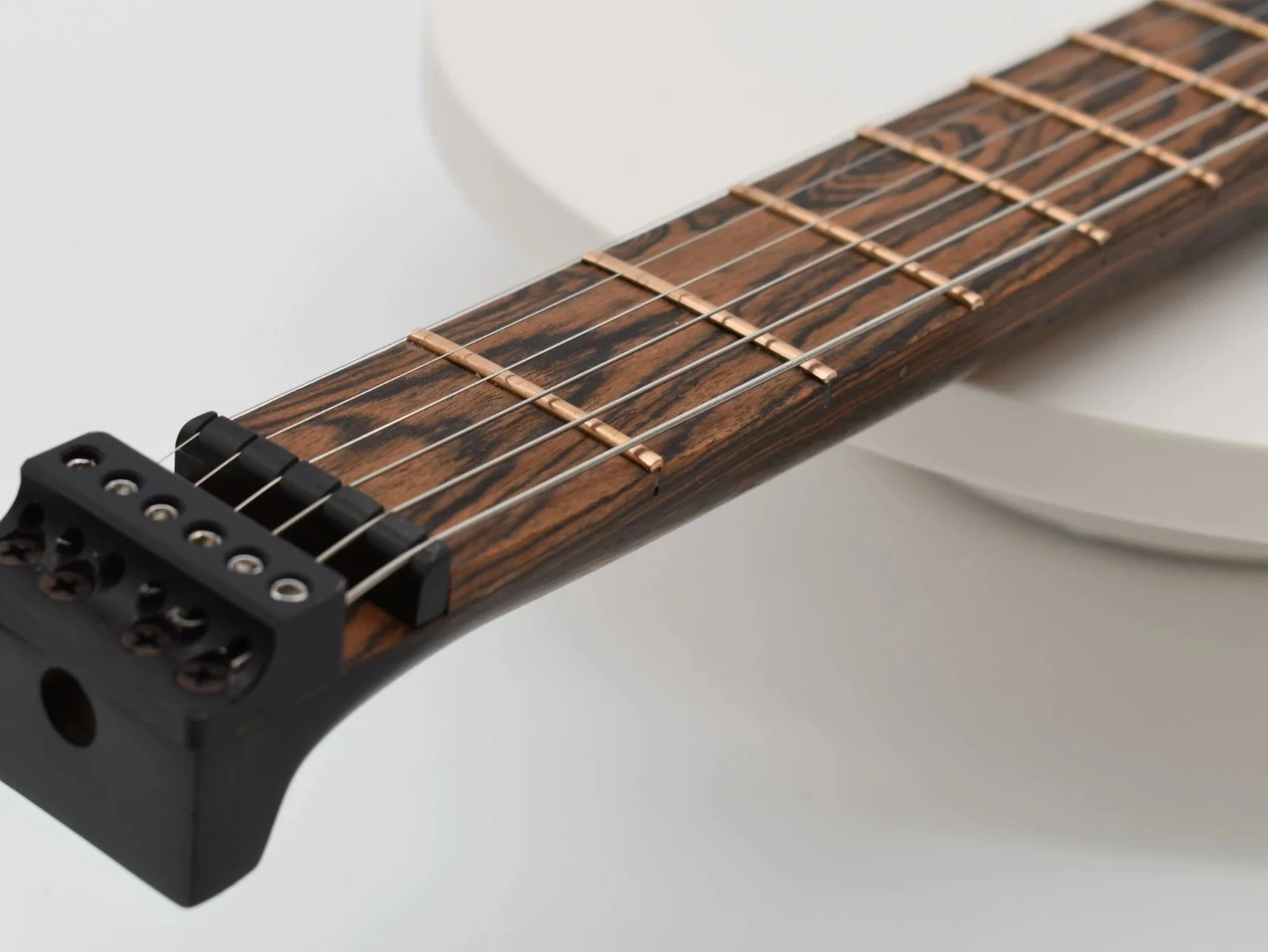
The headless neck detail
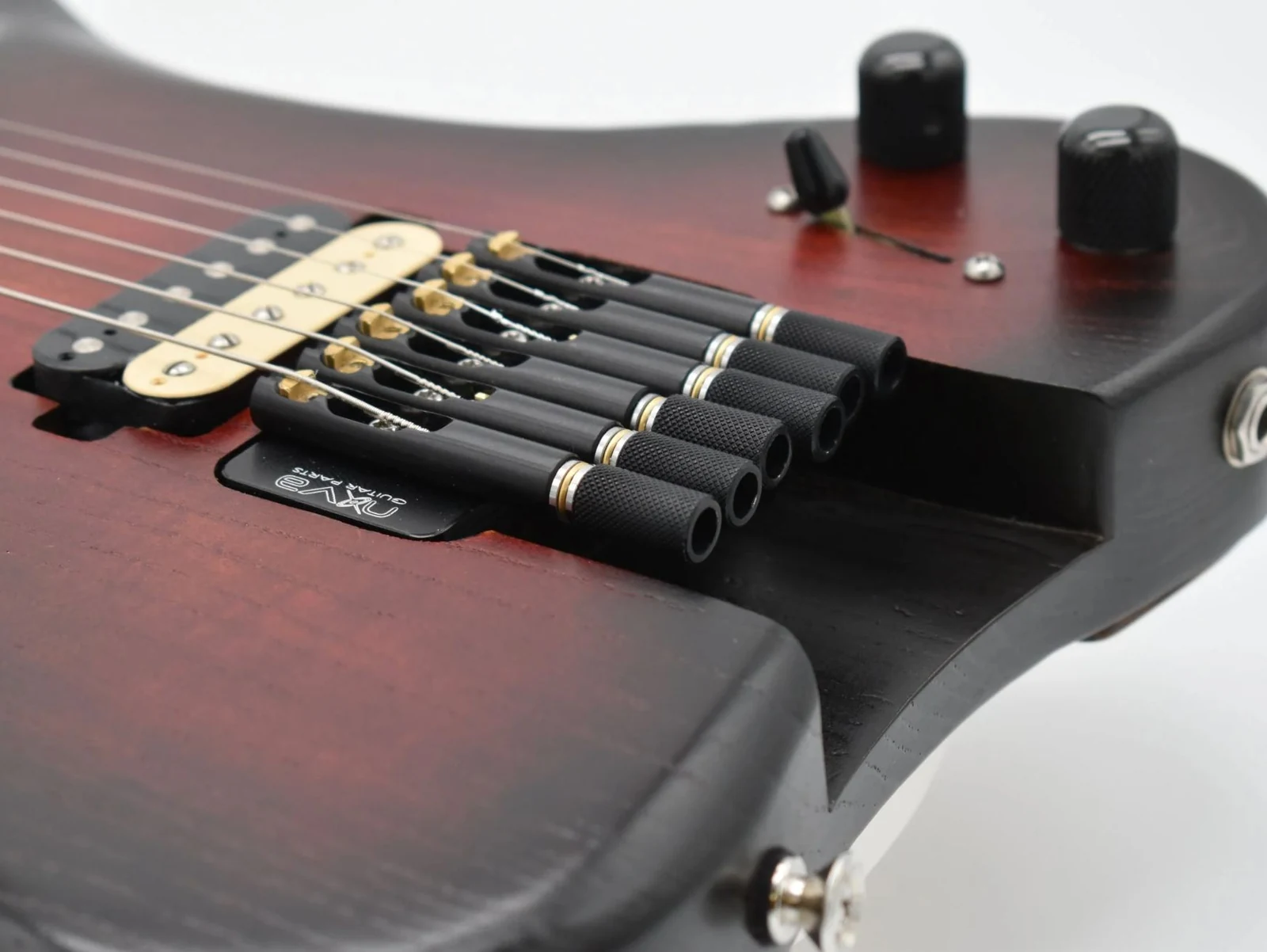
Hardware integrated into the body
Design around the tools that will cut it
A useful model has to connect to the workshop. Fillets and neck shapes were developed with John’s collection of router bits in mind, bringing his machining and assembly experience into the geometry.
That attention to the cutting process meant less time sanding and adjusting transitions afterward. The model became a repeatable starting point for custom work, with dimensions and features that could be changed together.
Precision leaves more room for the craft
CAD and CAM supported the handmade character of the guitars. CNC machining handled layout and repeatable geometry; John brought the subtle shaping, transitions and finishing that make an instrument his own.
John estimated that the combined improvements reduced overall build time by about 30%. The value extended beyond that estimate: a customer’s next variation could begin with an adaptable design instead of a fresh modeling job.
What keeps sending your design back to square one?
If every new size or customer option means starting over, tell us how you design and build today. We can scope a CAD model around the variations and manufacturing steps that matter.