
Case study · RetiVue EntireEye
It’s not all about megapixels.
Mechanical engineering for RetiVue’s retinal imaging systems: bringing camera hardware, custom optics and illumination together in parts that can be built.
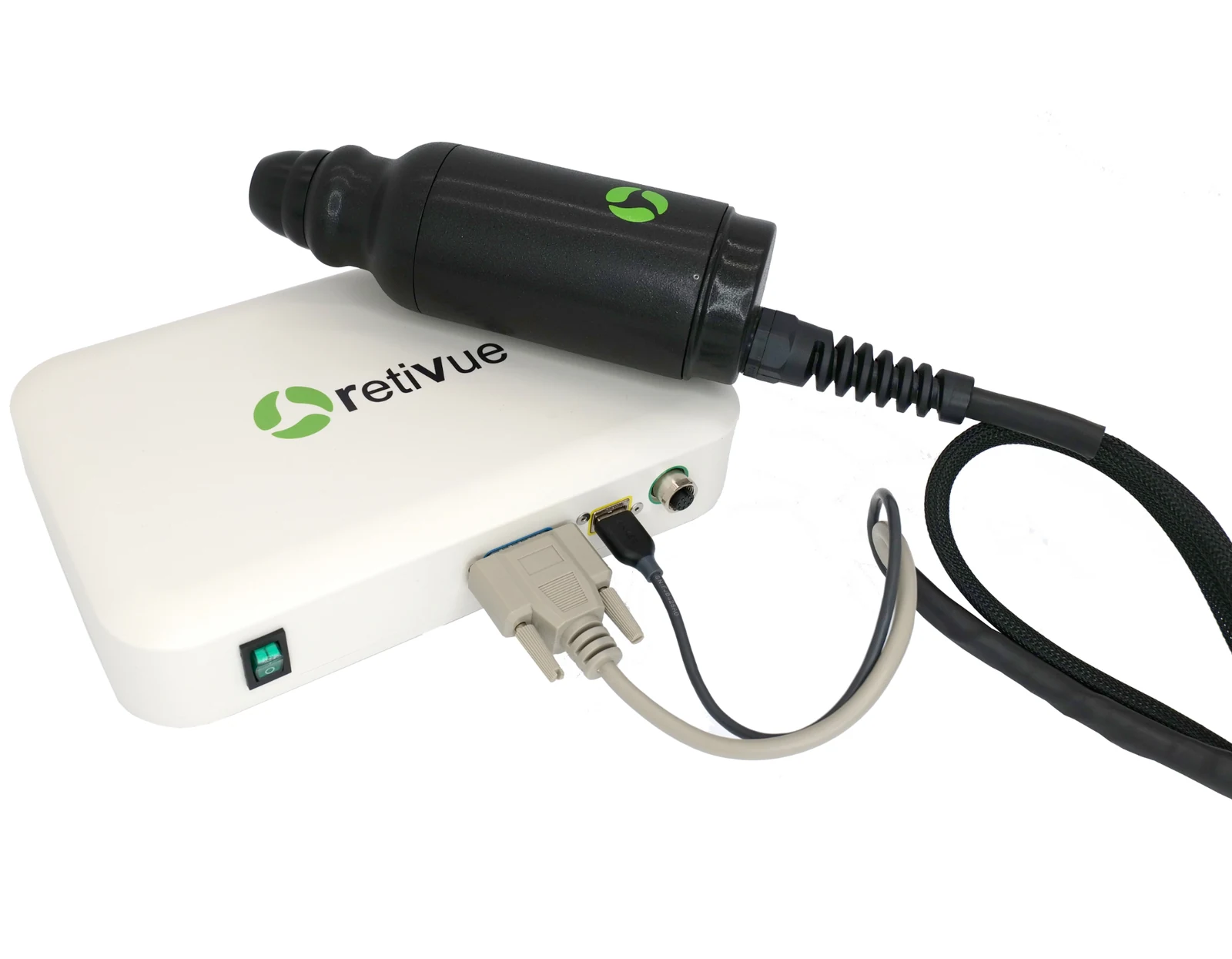
RetiVue’s EntireEye systems start with a high-end commercial camera. Getting from that camera to a complete retinal imaging instrument brings lenses, illumination, fixation lights, software and precisely located mechanical parts into the same design. Each has a job to do; the assembly has to make them work together.
Biangle Labs supported the mechanical side of that development across product iterations. Our task was to turn RetiVue’s ideas into physical parts and assemblies, keeping the optical requirements and the practical demands of manufacturing in view. The work spans desktop and portable equipment, as well as exploration of a next-generation portable-camera design.
Start with the camera. Develop the instrument around it.
The original camera brings controls and features intended for general photography. RetiVue’s application calls for a different arrangement. The project included working with camera manufacturers to remove unnecessary buttons, knobs, switches and viewfinders, making room for a dedicated imaging system.
RetiVue also rewrote portions of the camera firmware to connect it with its own software for remote control of the camera and other device functions. That software work belonged to RetiVue’s wider development effort. Biangle’s contribution centered on the mechanical design needed to bring the hardware into the complete assembly.
The important work happens between the components
Custom optics, illumination lights and fixation lights give the camera its application-specific role. Their arrangement is central to the instrument. The mechanical design therefore has to serve the optical layout, holding components in the positions required by the wider team’s design.
In this kind of work, an enclosure is part of a larger set of relationships. Where does a component sit? How is it supported? Can the part be made and assembled as intended? Those questions connect the optical requirements with the CAD model and, eventually, with hardware on the bench. They are also where mechanical decisions can make an ambitious concept practical to build.
From handling sketches to CAD packaging
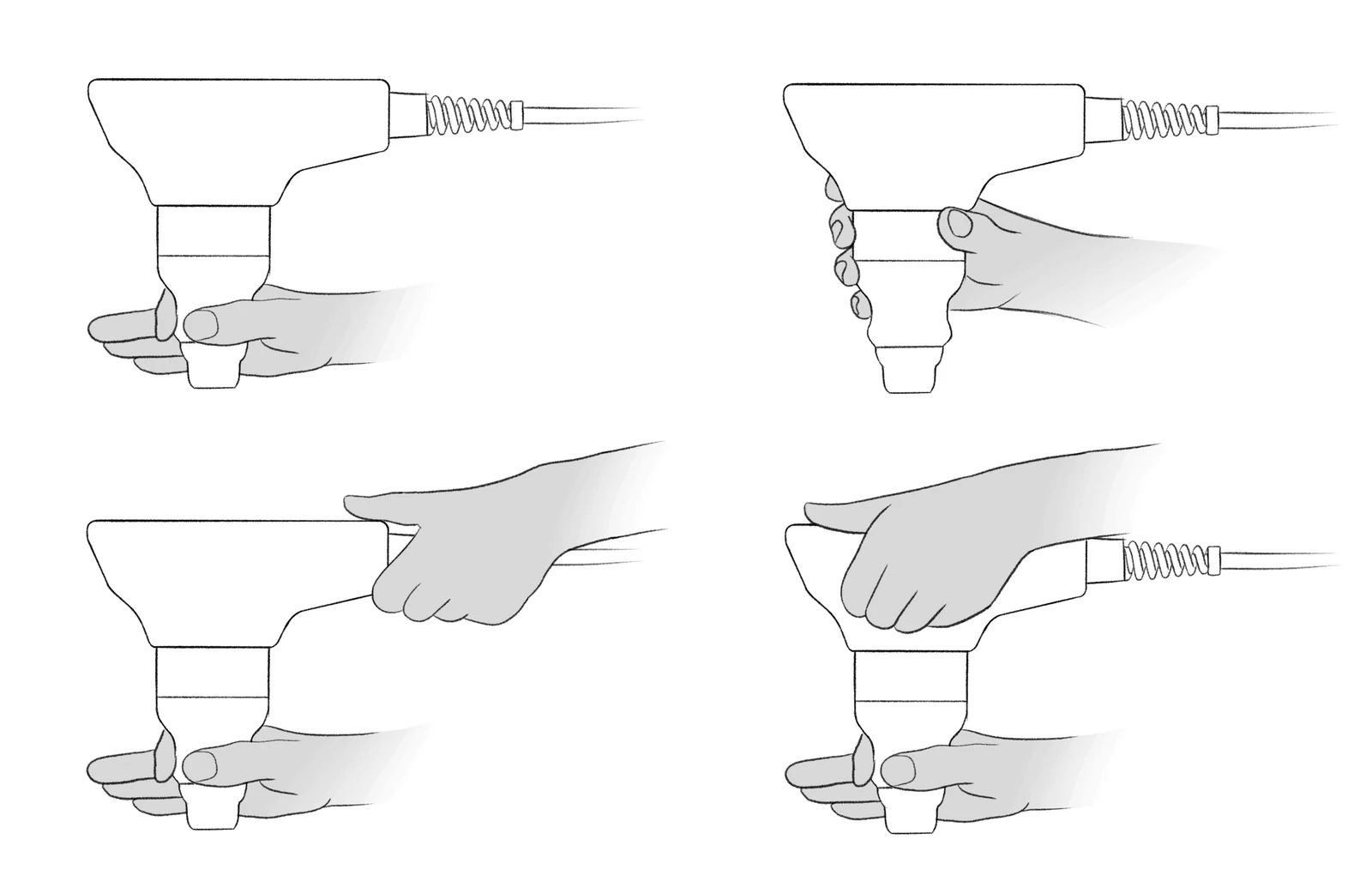
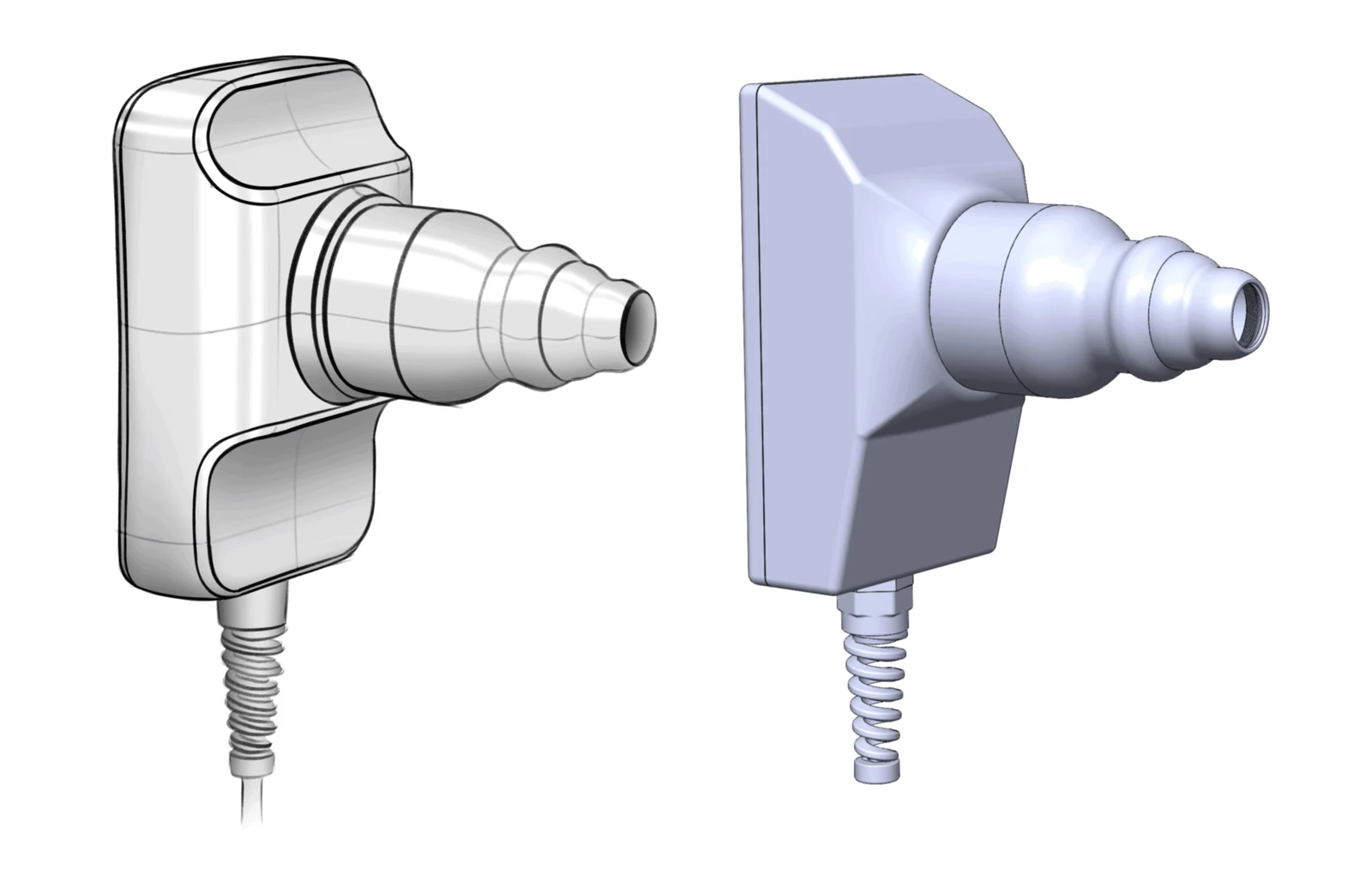
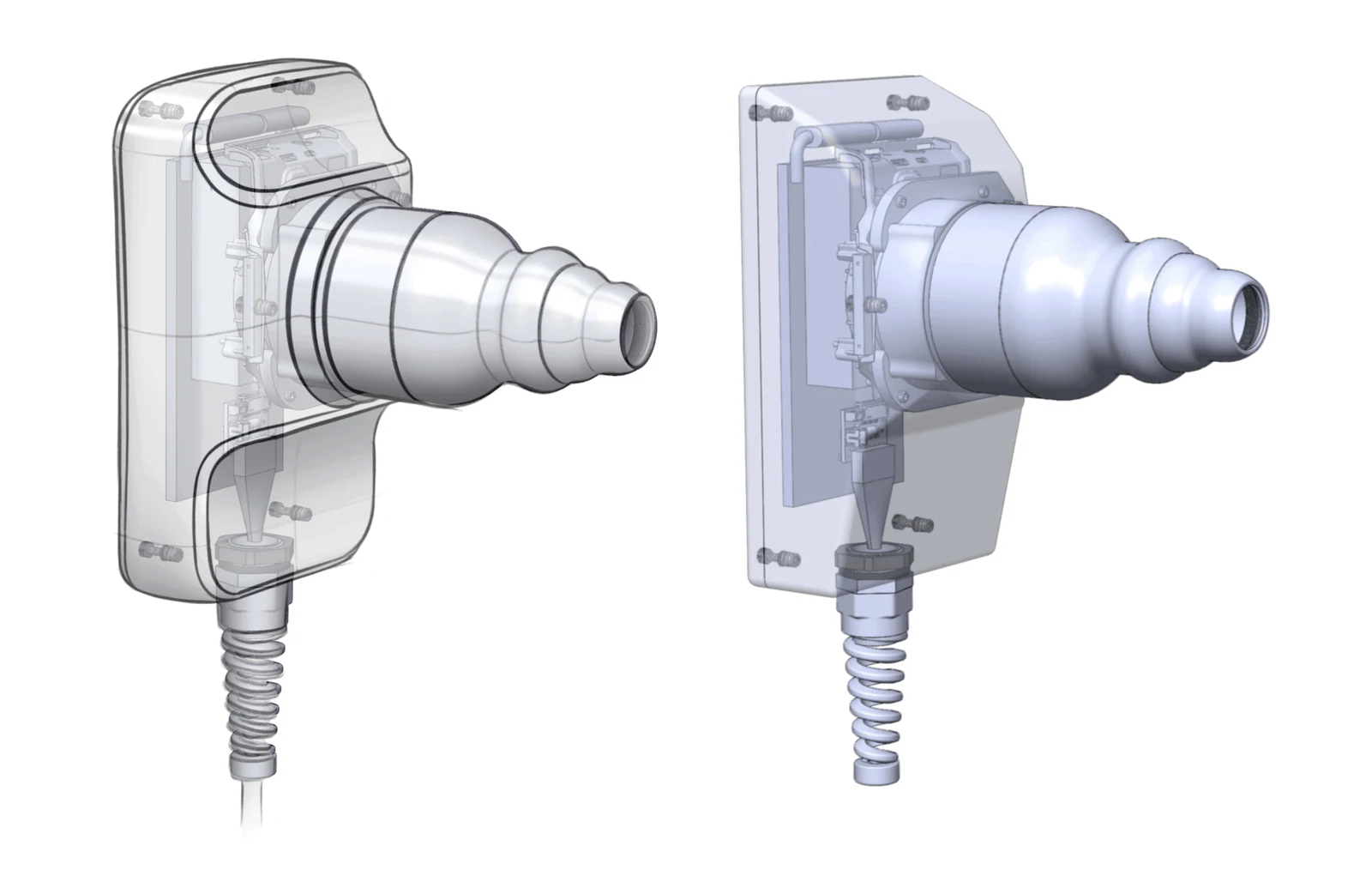
This next-generation portable-camera study explores handling, exterior form and the internal layout. These concept images and the completed equipment below show different product iterations; they are not an exact before-and-after record of one design.
01 · Idea & handling
02 · Exterior concept → CAD
03 · CAD & internal packaging
Design for the next build, too
One working prototype is an important milestone. Developing the parts for further units adds another demand: the design must be manufacturable in a way that preserves the intended function. Helping bridge that transition was a central part of Biangle’s responsibility.
Our work combined 3D design, prototyping, production design and design for manufacturing. The emphasis was on parts that could realize RetiVue’s product direction, while respecting the close positional relationships involved in optical equipment. A useful mechanical design connects what the team wants the instrument to do with how its components can actually be produced and assembled.
The physical hardware
Photographs from the wider EntireEye project show handheld and desktop equipment. Each image is a real product photograph; the design study above explores a later direction.
Portable system
Supported positioning
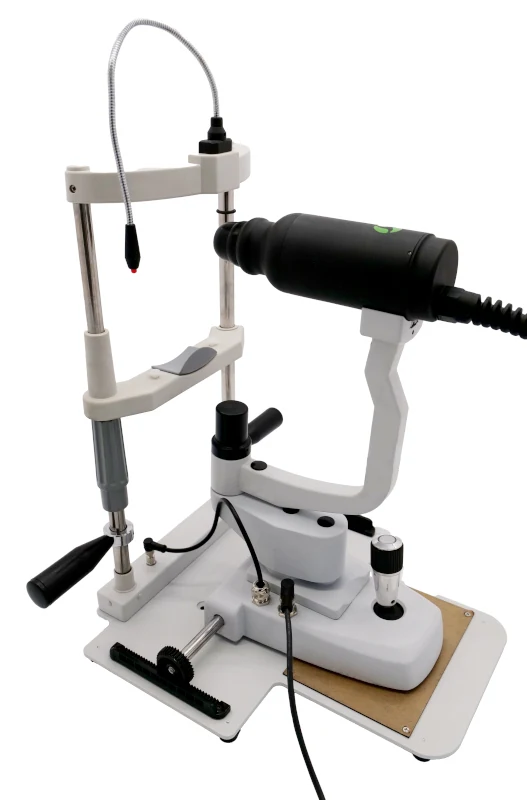
Desktop system
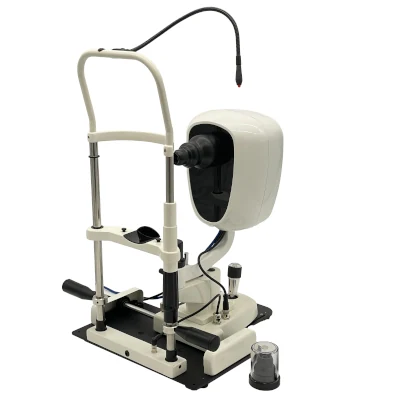
Real equipment—and the next design direction
The equipment took several forms: a desktop system, a portable system and a portable system mounted on a desktop base. The mechanical work also extended to small supporting parts, including eye-to-camera spacers produced in-house using SLA 3D printing.
Alongside the built equipment, the next-generation portable-camera study explores how the instrument might evolve. Hand sketches consider different grips and body shapes; CAD views bring the exterior concept and internal packaging together. The concept and the photographed cameras represent different product iterations.
What needs to come together in your product?
If your idea brings optics, mechanisms or existing hardware into a new assembly, tell us what you need it to do and where development stands. We can help define a useful next engineering milestone—from the first CAD layout to a physical prototype.